
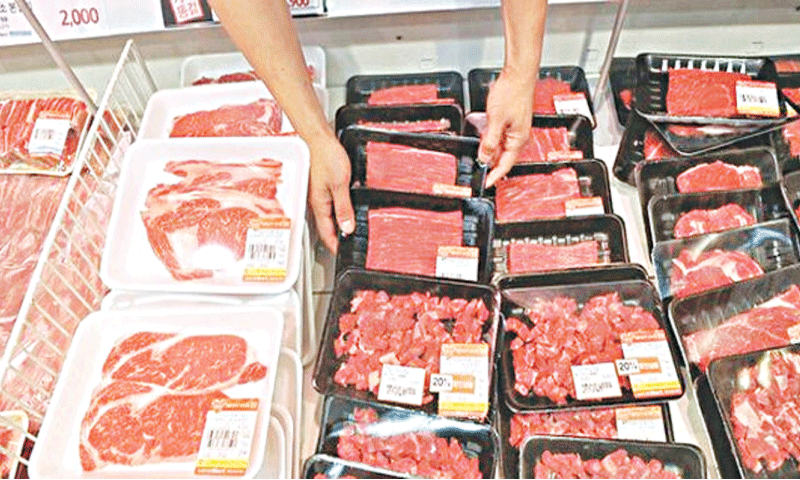
The Rising Demand for Quality Meat
In today’s global food trade, quality meat is no longer just a competitive advantage — it’s a requirement. International buyers from Europe, Middle East, Asia, and North America expect exporters to meet strict quality standards, regulatory compliance, and consistent supply.
Whether it’s frozen beef, chicken, or pork, exporters must deliver products that meet buyers’ expectations on taste, safety, certification, and presentation. In this blog, we’ll explore the key factors buyers look for when sourcing quality meat from global suppliers.
1. Consistent Quality and Freshness
Buyers demand meat that maintains premium quality throughout its journey — from slaughter to delivery. Consistency builds trust and strengthens long-term partnerships.
Key Factors Buyers Check:
-
Meat Color & Texture: Bright red for beef, pale pink for chicken — signs of freshness.
-
Proper Freezing: Rapid freezing at -18 °C or below preserves taste and texture.
-
Shelf Life: Products should arrive within optimal storage timelines.
-
No Contamination: Hygienic processing and packing environments are mandatory.
✅ Exporters that maintain uniform quality standards gain repeat orders and premium pricing.
2. Certifications & Regulatory Compliance
One of the strongest signals of quality meat is proper certification. Buyers prefer exporters who meet international food safety standards and can provide transparent documentation.
Most Required Certifications:
-
Halal Certification (for Muslim markets)
-
Codex Alimentarius Commission meat standards
-
World Organisation for Animal Health (WOAH) compliance
-
ISO 22000 & HACCP food safety management
-
Veterinary health certificates
For Middle Eastern markets like Saudi Arabia and United Arab Emirates, Halal certification is essential for market access.
3. Cold Chain Integrity
Quality meat is only as good as the cold chain behind it. Buyers expect exporters to use reliable cold storage and transportation systems that keep meat at the ideal temperature from origin to destination.
Buyer Expectations:
-
Reefer containers with temperature monitoring
-
Real-time tracking and shipping updates
-
No temperature fluctuations during loading/unloading
-
Documented cold chain logs for quality assurance
️ Maintaining the cold chain protects meat from spoilage and builds buyer confidence.
4. Professional Packaging & Labeling
Packaging isn’t just about presentation — it’s about protection, compliance, and brand reputation. High-quality packaging ensures that meat reaches the buyer intact and uncontaminated.
Preferred Packaging Methods:
-
Vacuum sealing for premium cuts
-
Shrink wrapping for bulk exports
-
Cartons with poly liners for wholesale shipments
-
Clear labeling with origin, weight, cut type, production & expiry dates
-
Visible Halal, ISO, or other certification logos
Exporters with professional packaging practices are more likely to secure high-volume contracts.
5. Halal Compliance for Muslim Markets
For many international buyers, especially in Indonesia, Malaysia, and the Middle East, Halal compliance is non-negotiable. Buyers need:
-
Verified Halal slaughter process
-
Certification from recognized Halal authorities
-
Clear documentation for customs clearance
-
Transparent traceability from farm to packaging
Halal certification not only opens markets but also builds strong buyer trust.
6. Competitive Pricing and Transparency
Even with quality as a priority, buyers remain cost-sensitive. Exporters who offer competitive pricing with transparent cost breakdowns stand out.
Buyer Pricing Considerations:
-
Cost per kg in relation to market trends
-
Transportation and customs fees
-
Packaging and storage costs
-
Payment flexibility (T/T, escrow, or other secure options)
A clear and fair pricing strategy builds credibility and supports long-term buyer relationships.
7. Communication, Reliability & After-Sales Support
Quality isn’t just in the product — it’s in the relationship. Buyers prefer exporters who:
-
Respond quickly to inquiries
-
Provide accurate shipping schedules
-
Offer after-sales support for claims or issues
-
Maintain consistent communication throughout the transaction
Professional exporters don’t just sell meat — they deliver service and trust.
8. Sustainability & Ethical Practices
More buyers are prioritizing sustainably sourced meat. Exporters that adopt ethical farming, animal welfare, and eco-friendly production methods are better positioned for global contracts.
-
Reduced carbon footprint in logistics
-
Ethical livestock treatment
-
Traceable sourcing
-
Recyclable packaging
♻️ Sustainability is becoming a key decision factor for large retail chains and distributors.
Benefits of Meeting Buyer Expectations for Quality Meat
| Buyer Expectation | Exporter Benefit |
|---|---|
| Consistent quality | Repeat orders and long-term contracts |
| Certifications | Access to premium markets |
| Cold chain logistics | Lower spoilage and higher profit margins |
| Professional packaging | Brand reputation and compliance |
| Competitive pricing | Stronger buyer confidence |
| Reliable communication | Faster deal closures |
Quality Meat Is About More Than Just Taste
To thrive in the global meat trade, exporters must deliver quality meat that meets the standards and expectations of international buyers. From certifications and cold chain logistics to professional packaging and transparent pricing, every step matters.
Exporters who focus on quality and trust don’t just sell products — they build global partnerships.
 English
  Spanish