
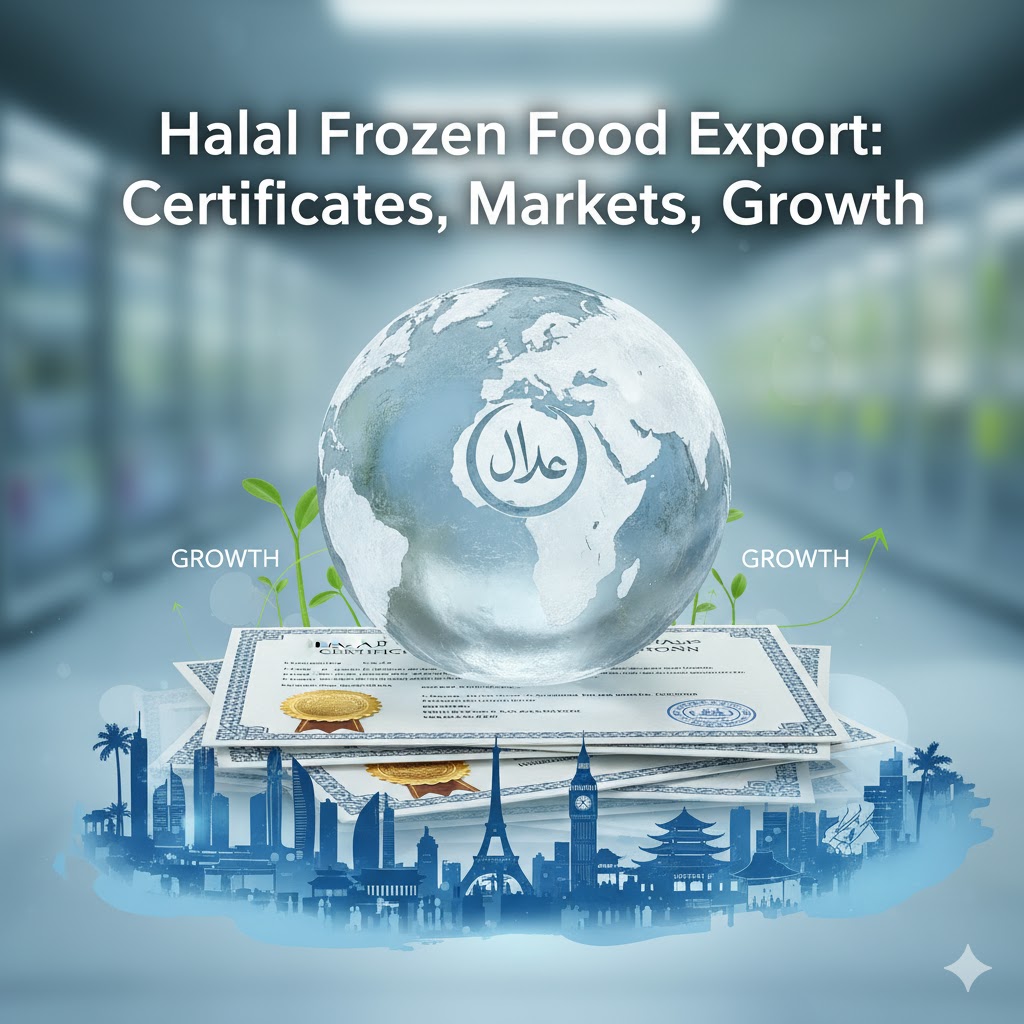
The global demand for Halal frozen food is growing faster than ever. Driven by rising Muslim populations, evolving consumer preferences, and expanding international trade, the Halal food industry is now worth over $2 trillion — and it continues to grow every year.
For exporters in Brazil — the world’s largest meat exporter and a leading Halal supplier — this represents a massive opportunity. But with opportunity comes responsibility: meeting Halal certification standards, understanding key markets, and positioning your business for long-term growth.
At GlobalExporter-BR, we specialize in exporting premium Halal beef, chicken, and other food products from Brazil to international markets across Asia, the Middle East, and Africa. This guide explores how Halal frozen food exports work, which certificates matter, where the biggest markets are, and how businesses can grow sustainably in this competitive sector.
Focus Keyphrase: Halal Frozen Food Export
Secondary Keywords: Halal meat certification, Halal markets, Halal food export from Brazil, Brazilian Halal exporters, Halal beef and chicken, Halal food trade growth.
1. What Is Halal Frozen Food?
The term “Halal” comes from Arabic, meaning “permissible” under Islamic law. In the food industry, it refers to products that comply with Islamic dietary guidelines — including how animals are slaughtered, how food is processed, stored, and even transported.
When we talk about Halal frozen food, we’re referring to frozen meat, poultry, seafood, or ready-to-eat meals that have been certified Halal by recognized Islamic authorities.
Key Halal Principles Include:
- Proper slaughter (Zabiha) by a Muslim under Islamic guidelines.
- Invocation of Allah’s name before slaughter.
- No contamination with non-Halal items (like pork or alcohol).
- Traceability throughout production, packaging, and logistics.
For exporters, this means every step — from the farm to the freezer — must follow Halal integrity.
2. Why Halal Frozen Food Exports Are Growing Rapidly
2.1 Rising Global Muslim Population
Over 1.9 billion Muslims worldwide are driving demand for Halal products. Major growth is coming from Indonesia, Malaysia, the Middle East, and parts of Africa — all heavily import-dependent regions.
2.2 Urbanization & Convenience
Modern consumers in Muslim countries prefer frozen and ready-to-cook Halal meals for convenience, safety, and consistency. This demand fuels the Halal frozen food trade, including frozen chicken, beef, lamb, and processed foods.
2.3 Confidence in Halal Supply Chains
Countries trust exporters like Brazil because of strict Halal certification systems, traceability, and global reputation for quality meat. This trust has made Brazil the world’s largest Halal meat supplier, exporting billions in certified Halal beef and poultry every year.
2.4 Non-Muslim Markets Joining the Trend
Even non-Muslim consumers increasingly prefer Halal products because they’re associated with cleaner production, animal welfare, and food safety — further boosting export demand.
3. Brazil: A Global Leader in Halal Frozen Food Exports
Brazil has become a global hub for Halal meat exports, supplying Halal beef, chicken, and processed foods to more than 100 countries.
3.1 Why Brazil Dominates Halal Meat Exports
- Strong partnerships with Islamic certification bodies.
- Advanced food safety and export infrastructure.
- Longstanding trade ties with the Middle East and Asia.
- Major meat exporters (like BRF, JBS, Marfrig) maintain certified Halal facilities.
Brazil currently exports over 2 million tons of Halal poultry annually, with Saudi Arabia, the UAE, and Indonesia as top destinations.
3.2 The Role of Exporters like GlobalExporter-BR
At GlobalExporter-BR, we ensure every product — from beef and chicken cuts to edible oils — is 100% Halal certified, stored and shipped under strict Halal compliance protocols. We partner with recognized Islamic certifying bodies in Brazil to ensure complete transparency and buyer confidence.
4. Understanding Halal Certificates for Exporters
4.1 What Is a Halal Certificate?
A Halal certificate confirms that a product meets all Islamic dietary standards. It is issued by a recognized Halal authority after inspecting slaughterhouses, production lines, packaging, and logistics.
4.2 Main Types of Halal Certification
| Type | Description |
|---|---|
| Product Certification | For individual food products (meat, poultry, processed foods). |
| Process Certification | For production plants ensuring Halal compliance. |
| Export Certification | Mandatory document accompanying shipments to Muslim countries. |
4.3 Major Halal Certifying Bodies in Brazil
Brazil is home to several internationally recognized Halal authorities, such as:
- FAMBRAS Halal (Federação das Associações Muçulmanas do Brasil)
- CDIAL Halal
- CIBAL Halal
- Al-Falaah Halal Certification
These organizations are approved by importing countries like Saudi Arabia, UAE, Malaysia, Egypt, and Indonesia.
4.4 Why Certification Matters
Without official certification, exporters cannot access Halal markets. Many importers will refuse products without documentation from a recognized Halal body. Certification also:
- Builds trust with buyers.
- Increases market access.
- Prevents border delays or rejections.
- Enhances brand reputation globally.
5. Key Global Markets for Halal Frozen Food Exports
5.1 Middle East
The Middle East remains the largest importer of Halal frozen meat. Countries like Saudi Arabia, UAE, Qatar, and Kuwait import large volumes of Halal beef and poultry.
Brazil dominates this market thanks to long-standing diplomatic and commercial ties with GCC nations.
5.2 Southeast Asia
Indonesia and Malaysia are the biggest Muslim markets in Asia, with strict Halal import regulations. Both countries recognize Brazilian Halal certifiers, which gives exporters a strong foothold.
5.3 Africa
Emerging markets such as Nigeria, Egypt, and South Africa are rapidly increasing their Halal frozen food imports, driven by urbanization and population growth.
5.4 Europe
Muslim populations in France, the UK, and Germany are expanding demand for certified Halal meat and frozen ready-to-eat products. European distributors source heavily from Brazil for cost and quality advantages.
5.5 South & Central Asia
Countries like Pakistan, Bangladesh, and Kazakhstan are expanding their Halal frozen food imports — offering new opportunities for exporters who meet their certification and quality requirements.
6. Growth Trends in Halal Frozen Food Exports
6.1 Market Value Growth
According to industry reports, the global Halal food market is projected to reach $3.2 trillion by 2030, with frozen meat and poultry leading the expansion.
6.2 Brazil’s Halal Export Growth
Brazil’s Halal exports grew 18% in 2024, reaching record volumes. Beef and chicken led the surge, largely due to increased demand in the Middle East and Asia.
6.3 E-Commerce and Retail Expansion
With online grocery delivery expanding in GCC and Asia, frozen Halal food products (from meat to snacks) are becoming a major retail category. Exporters that can brand and package effectively for these markets stand to gain the most.
6.4 Focus on Sustainability and Traceability
Modern Halal consumers also value ethical sourcing, animal welfare, and sustainable practices — aligning well with Brazil’s growing focus on eco-friendly, traceable food exports.
7. Export Requirements for Halal Frozen Food
To access international Halal markets, exporters must meet both Halal and general food export requirements.
7.1 Documentation Needed:
- Valid Halal Certificate issued by an accredited body.
- Health Certificate from Brazil’s Ministry of Agriculture (MAPA).
- Export License and Customs Declarations.
- Packaging and Labeling compliant with importing country laws.
- Shipping Documents (Bill of Lading, Commercial Invoice, Packing List).
7.2 Storage and Transport Compliance
All Halal frozen products must be stored, transported, and loaded in facilities that maintain Halal integrity — avoiding any contamination with non-Halal items.
7.3 Working with a Trusted Export Partner
At GlobalExporter-BR, we ensure every step meets both Halal and international trade regulations, from slaughterhouse certification to final delivery. Our export team coordinates directly with Halal authorities and logistics providers to guarantee full compliance.
8. Opportunities for Exporters: How to Grow in Halal Markets
8.1 Identify Priority Markets
Start with countries that have existing trade ties with Brazil and recognize Brazilian Halal certificates (e.g., Saudi Arabia, UAE, Malaysia, Indonesia).
8.2 Build Long-Term Relationships
Halal buyers value trust and reliability. Consistency in certification, quality, and supply schedules builds long-term contracts and repeat business.
8.3 Develop Private Label or Co-Branding
Many international distributors seek private-label Halal meat exporters. Offering custom packaging and branding can open lucrative deals.
8.4 Invest in Cold Chain Logistics
Halal frozen products rely on efficient cold chain systems. Investing in reliable freezing, transport, and monitoring ensures quality and compliance from Brazil to destination ports.
8.5 Focus on Value-Added Products
Beyond raw meat, explore Halal-certified processed foods like ready-to-cook chicken, beef sausages, and marinated cuts — categories showing double-digit annual growth.
8.6 Leverage Digital Trade Channels
Global buyers increasingly discover suppliers online. Optimize your digital presence with SEO (like this article), professional B2B listings, and multilingual marketing targeting Arabic and Malay-speaking regions.
9. Challenges in Halal Frozen Food Export
Even with growing demand, exporters face some challenges:
- Complex certification processes and documentation.
- Different Halal standards across countries.
- Price competition from regional suppliers.
- Sanitary or trade restrictions affecting shipment approvals.
- High logistics costs for temperature-controlled exports.
Partnering with experienced exporters like GlobalExporter-BR reduces these risks — ensuring smooth compliance, certification, and delivery.
10. How GlobalExporter-BR Supports Halal Frozen Food Export Growth
At GlobalExporter-BR, we are proud to be a trusted Brazilian Halal exporter connecting world markets with premium quality Halal beef, chicken, and edible oils.
Our Expertise Includes:
- End-to-End Halal Compliance: From slaughter to shipment.
- Partnership with Leading Halal Certifiers: FAMBRAS, CDIAL, and others.
- Cold Chain Management: Maintaining integrity of frozen products.
- Custom Packaging & Labeling: Adapted to destination requirements.
- Market Intelligence: Insight into emerging Halal trends and buyer preferences.
We deliver reliable, traceable, and certified Halal products that meet both religious and quality standards — helping clients build trust in their target markets.
11. Future Outlook: Halal Frozen Food Export 2030
The next decade will redefine the Halal frozen food export landscape. Here’s what to expect:
- Massive growth in Asia and Africa, where populations and incomes are rising.
- More government-to-government trade agreements focusing on Halal certification recognition.
- Digital traceability systems making it easier to verify Halal compliance globally.
- Sustainability integration, as importers demand eco-friendly Halal production.
- Innovation in Halal convenience foods, driving new product categories and export potential.
Brazilian exporters, backed by strong certification systems and global trust, are perfectly positioned to lead this evolution.
The Halal frozen food export industry is more than a trade opportunity — it’s a bridge between cultures, ethics, and global consumer needs. With the right certification, market strategy, and supply chain discipline, exporters can tap into one of the fastest-growing segments of the global food trade.
At GlobalExporter-BR, we combine Brazil’s natural advantages — world-class meat production, strong Halal partnerships, and reliable logistics — to deliver excellence in every shipment.
If you’re looking to source or distribute Halal-certified frozen beef, chicken, or edible oils, connect with us today. Together, we can expand your reach in the booming global Halal food
Beef Exporting Countries 2021 vs 2025: Which Rose & Which Fell
 English
  Spanish