
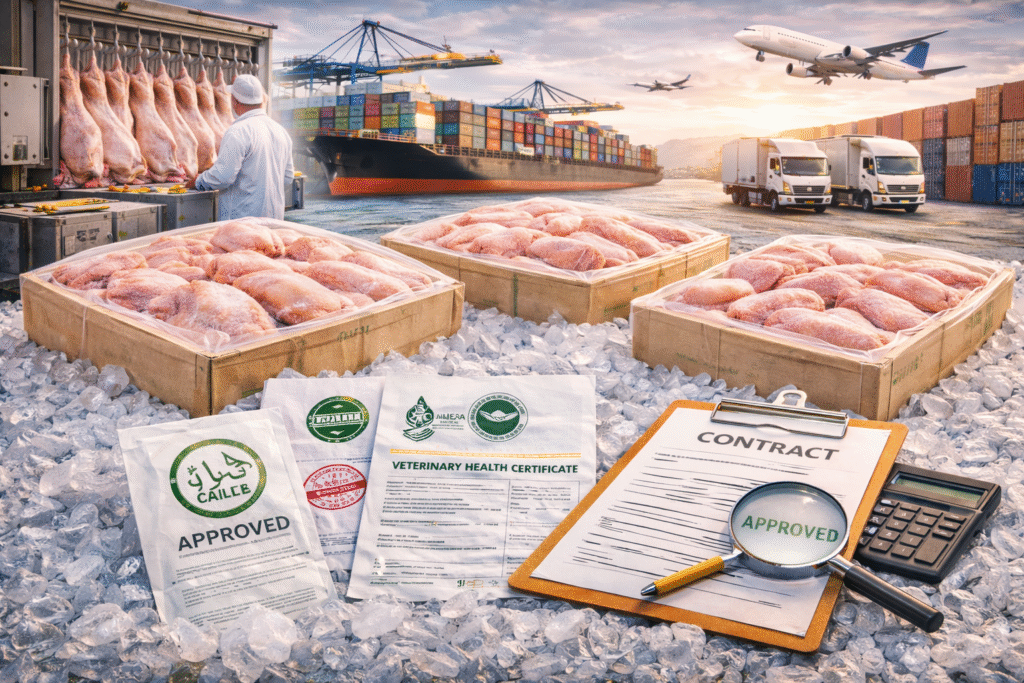
Introduction: Why Halal Frozen Chicken Export Is Expanding Rapidly
The halal frozen chicken export market is growing faster than ever in 2026. Rising Muslim populations, stricter food certification requirements, and expanding import programs in Africa and the Middle East have created strong global demand for certified halal poultry.
Unlike fresh poultry, frozen chicken provides long shelf life, lower spoilage risk, and easier global transportation. When combined with halal certification, it becomes one of the most traded protein products in international markets.
Countries like Brazil have built a dominant position in halal frozen chicken export due to scale, compliance systems, and competitive pricing.
This article explores how the halal frozen chicken export industry works and what importers should consider before sourcing.
What Is Halal Frozen Chicken Export?
Halal frozen chicken export refers to poultry that:
-
Is slaughtered according to Islamic dietary laws
-
Is certified by approved halal authorities
-
Is processed under hygienic conditions
-
Is frozen and stored at -18°C for international shipment
Halal certification ensures the product complies with religious guidelines while maintaining food safety standards.
For many Muslim-majority countries, halal certification is mandatory for poultry imports.
Why Frozen Format Dominates Halal Poultry Trade
Frozen chicken offers several advantages in international trade:
1. Extended Shelf Life
Products can remain safe for up to 12 months when stored properly.
2. Easier Long-Distance Shipping
Refrigerated containers allow safe transportation across continents.
3. Lower Waste Risk
Reduced spoilage improves profit margins for importers.
4. Inventory Flexibility
Distributors can release stock gradually.
Because of these benefits, frozen chicken wholesale drives the majority of halal poultry export transactions.
Brazil’s Leadership in Halal Frozen Chicken Export
Brazil has become the leading supplier in halal poultry export markets.
Key Reasons:
-
Strong halal certification systems
-
Large-scale poultry production
-
Competitive feed costs
-
Government veterinary inspection
-
Efficient export logistics
Brazil chicken exporters operate dedicated halal production lines supervised by certified Islamic authorities.
Major importing markets include:
-
Saudi Arabia
-
United Arab Emirates
-
Egypt
-
Iraq
-
Malaysia
-
Indonesia
Brazil meat exporters dominate these markets due to consistent supply and competitive pricing.
Halal Certification Process in Poultry Export
Reliable chicken exporters follow strict halal procedures:
-
Birds must be healthy at slaughter.
-
Slaughter must be performed by a Muslim.
-
The name of Allah must be recited.
-
Blood must be fully drained.
-
Cross-contamination must be avoided.
-
Documentation must be issued by recognized halal authorities.
Importers should verify halal certificates before shipment departure.
Popular Halal Frozen Chicken Products
Bulk halal frozen chicken exports typically include:
-
Whole frozen chicken
-
Chicken leg quarters
-
Chicken wings
-
Chicken breast fillets
-
Chicken paws
In African markets, leg quarters are the highest-volume imported product.
Pricing Factors in Halal Frozen Chicken Export
Pricing depends on multiple variables:
| Factor | Impact |
|---|---|
| Feed costs | High |
| Global demand | High |
| Certification costs | Medium |
| Shipping distance | High |
| Currency exchange | Medium |
Because halal certification adds compliance costs, prices may be slightly higher than non-certified poultry.
However, demand stability often compensates for this difference.
Cold Chain Management Requirements
Maintaining temperature integrity is essential.
Reliable exporters ensure:
-
Storage at -18°C
-
Temperature-monitored containers
-
Fast loading and unloading
-
Real-time shipment tracking
Failure in cold chain management can result in rejected shipments and financial loss.
How Importers Should Evaluate Halal Frozen Chicken Suppliers
Before signing contracts, buyers should verify:
1. Valid Halal Certification
Check issuing authority and expiration date.
2. Veterinary Health Certificate
Confirms compliance with importing country regulations.
3. Export History
Ensure supplier has experience shipping to your market.
4. Production Capacity
Confirm ability to meet long-term volume requirements.
5. Logistics Network
Reliable freight partnerships reduce shipping delays.
Working with experienced brazil meat exporters significantly reduces operational risk.
Risks in Halal Poultry Trade
Although stable, risks include:
-
Regulatory changes in importing countries
-
Avian influenza outbreaks
-
Shipping container shortages
-
Currency volatility
Diversifying suppliers and securing long-term frozen chicken wholesale contracts reduces exposure.
Market Outlook for 2026 and Beyond
Halal frozen chicken export is expected to grow steadily due to:
-
Population growth in Muslim-majority countries
-
Increased urbanization
-
Expansion of halal-certified retail chains
-
Rising demand in Africa
Brazil is positioned to maintain dominance due to scale and compliance systems.
Strategic Advice for Importers
To succeed in halal poultry sourcing:
-
Partner with certified brazil chicken exporters.
-
Lock in long-term supply agreements.
-
Verify documentation before shipment.
-
Monitor grain markets to anticipate pricing shifts.
-
Maintain cold storage capacity domestically.
Long-term partnerships outperform spot market purchases.
Conclusion
Halal frozen chicken export remains one of the most stable and rapidly growing segments in global poultry trade. With strong demand across Africa and the Middle East, certified suppliers play a crucial role in maintaining food security.
Brazil continues to lead the halal poultry market through scale, certification, and competitive pricing.
For importers and distributors seeking stable margins and reliable supply chains in 2026, partnering with established halal-certified chicken exporters is a strategic necessity.
 English
  Spanish