
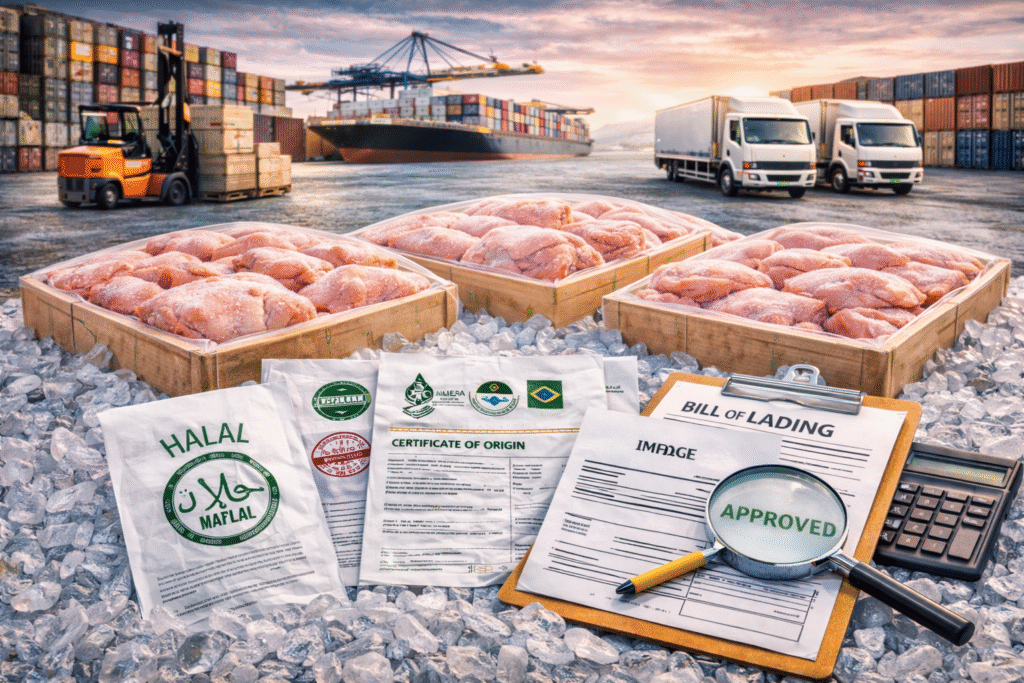
Introduction: Why Poultry Export Documentation Is Critical
In global poultry export, documentation is just as important as product quality. Without proper paperwork, shipments can be delayed, rejected, or even destroyed at destination ports.
Whether exporting brazil chicken, halal frozen poultry, or bulk frozen chicken wholesale products, accurate and complete poultry export documentation ensures smooth customs clearance and regulatory compliance.
In 2026, as international trade regulations become stricter, exporters and importers must understand every document required in poultry export transactions.
This guide explains all key documentation, compliance standards, and risk management strategies in global poultry trade.
What Is Poultry Export Documentation?
Poultry export documentation refers to the official papers required to ship poultry products internationally.
These documents confirm:
-
Product safety
-
Regulatory compliance
-
Country of origin
-
Religious certification (if required)
-
Trade agreement terms
-
Payment conditions
Proper documentation protects both exporter and importer from legal and financial risks.
Core Documents Required for Poultry Export
1. Veterinary Health Certificate
This is one of the most important documents in poultry export.
Issued by government veterinary authorities, it certifies that:
-
The poultry is safe for consumption
-
The product complies with animal health regulations
-
The shipment meets importing country requirements
Without this certificate, cargo may be rejected.
2. Certificate of Origin
This document confirms the country where the poultry was produced.
It is required for:
-
Customs clearance
-
Tariff determination
-
Trade agreement eligibility
For example, many importers specifically request brazil meat exporter documentation to verify origin.
3. Halal Certificate (If Required)
In halal chicken export markets, this document is mandatory.
It certifies that:
-
Slaughter was conducted according to Islamic law
-
Processing met halal guidelines
-
The product was supervised by recognized authorities
Failure to provide halal certification can result in shipment refusal in Muslim-majority countries.
4. Commercial Invoice
The commercial invoice includes:
-
Product description
-
Quantity and weight
-
Unit price
-
Total value
-
Payment terms
Customs authorities use this document to calculate import duties.
5. Packing List
The packing list details:
-
Number of cartons
-
Net weight and gross weight
-
Container numbers
-
Batch numbers
This ensures traceability during customs inspection.
6. Bill of Lading
Issued by the shipping company, this document confirms:
-
Cargo has been loaded
-
Shipping route
-
Consignee details
-
Freight terms
The bill of lading is essential for cargo release at the destination port.
Additional Compliance Documents
Depending on the importing country, additional documents may include:
-
HACCP certification
-
ISO 22000 certification
-
Import permit
-
Sanitary certificate
-
Phytosanitary declaration (in some cases)
-
Insurance certificate
Experienced chicken exporters ensure all paperwork is completed before shipment departure.
Documentation Process in Poultry Export
The typical documentation workflow follows these steps:
-
Product processing and quality inspection
-
Veterinary approval and health certificate issuance
-
Halal certification (if applicable)
-
Preparation of commercial invoice and packing list
-
Booking shipment and receiving bill of lading
-
Submission of documents to importer and customs
Proper coordination between exporter, freight forwarder, and importer is critical.
Common Documentation Errors That Cause Delays
Mistakes in poultry export documentation can be costly.
Common issues include:
-
Mismatched weights between invoice and packing list
-
Expired halal certificates
-
Incorrect consignee name
-
Missing health certificate stamps
-
Incorrect container numbers
These errors can delay clearance and increase storage costs.
Why Brazil Is Known for Strong Export Compliance
Brazil meat exporters have built strong reputations for documentation compliance.
Key strengths include:
-
Government-supervised veterinary inspection
-
Standardized export procedures
-
Recognized halal certification bodies
-
Digitized export processing systems
This reliability makes brazil chicken shipments attractive to international buyers.
Digitalization in Poultry Export Documentation
In 2026, digital documentation is becoming standard practice.
Many exporters now use:
-
Electronic bills of lading
-
Digital veterinary certificates
-
Blockchain traceability systems
-
Online customs filing
Digital systems reduce paperwork errors and improve shipment transparency.
How Importers Should Verify Export Documents
Before shipment departure, importers should:
-
Request scanned copies of all documents.
-
Verify halal certification validity.
-
Confirm container and seal numbers.
-
Cross-check invoice details with purchase agreement.
-
Ensure compliance with local import regulations.
Early verification prevents costly port delays.
Risks of Incomplete Poultry Export Documentation
Incomplete paperwork can result in:
-
Customs rejection
-
Fines
-
Cargo seizure
-
Product spoilage due to delay
-
Loss of customer trust
Documentation errors are among the most common causes of poultry export disruption.
Future Trends in Export Compliance
The poultry export industry is moving toward:
-
Increased digital verification
-
Stronger traceability requirements
-
Stricter animal welfare compliance
-
Enhanced ESG reporting
Exporters investing in compliance systems will gain competitive advantage.
Strategic Advice for Exporters
To ensure smooth operations:
-
Maintain updated certification records.
-
Work with experienced freight forwarders.
-
Double-check documentation before shipping.
-
Understand specific importing country regulations.
-
Train staff in export compliance procedures.
Strong documentation practices protect profit margins.
Conclusion
Poultry export documentation is the foundation of successful international poultry trade. Without accurate paperwork, even the highest-quality frozen chicken shipments can face costly delays.
From veterinary certificates to halal documentation and bills of lading, every document plays a critical role in global poultry export operations.
In 2026, exporters and importers who prioritize compliance, accuracy, and digital systems will lead the industry and avoid unnecessary risk.
 Spanish
  English