
The poultry industry is one of the fastest-growing sectors in global agriculture, and chicken remains the most consumed meat worldwide. Whether in fresh, frozen, or processed form, chicken exports fuel international trade, feeding billions of people each year.
For importers, distributors, and retailers, understanding the leading chicken exporting countries helps identify the best sourcing partners, optimize pricing, and secure steady supply. Let’s explore the major players shaping the global poultry market in 2025.
Top Chicken Exporting Countries in 2025
Here’s a snapshot of the leading nations dominating global poultry exports:
| Rank | Country | Export Volume (MT) | Export Value (USD Billion) | Market Share |
|---|---|---|---|---|
| 1 | Brazil | 4.6 million | $10.8 B | 33% |
| 2 | United States | 3.6 million | $6.9 B | 25% |
| 3 | European Union | 2.2 million | $5.5 B | 18% |
| 4 | Thailand | 1.3 million | $4.2 B | 12% |
| 5 | Turkey | 550,000 | $1.8 B | 6% |
| 6 | Ukraine | 400,000 | $1.3 B | 3% |
| 7 | Argentina | 300,000 | $900 M | 2% |
Figures represent approximate data for 2025 based on poultry trade forecasts.
1. Brazil — The Global Poultry Powerhouse
Brazil remains the largest chicken exporter in the world, accounting for over one-third of global poultry trade.
Why Brazil Leads:
-
Year-round production capacity
-
Large-scale, cost-efficient farms
-
Strong Halal certification for Middle East exports
-
Excellent logistics & cold chain infrastructure
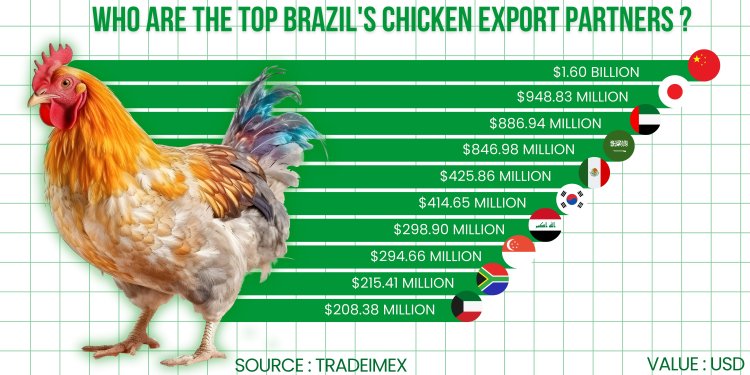
Brazilian poultry is shipped to more than 150 countries, including China, Saudi Arabia, Japan, and the EU.
2. United States — Reliable High-Volume Supplier
United States ranks second globally, exporting both frozen and processed chicken.
Key Advantages:
-
Massive poultry production scale
-
Affordable prices for international buyers
-
Advanced freezing and packaging technology
-
Strong presence in Asia, Africa, and Latin America
U.S. poultry exporters offer bulk pricing, making them ideal partners for importers focused on high volume at competitive rates.
3. European Union — High Standards & Specialty Markets
European Union collectively ranks third, with exports focusing on premium and specialty poultry products.
EU Strengths:
-
Strict animal welfare and safety standards
-
Large consumer demand in Africa and the Middle East
-
Focus on added-value processed poultry
European poultry is often sold at a higher price point, reflecting its quality certifications and sustainable farming practices.
4. Thailand — A Major Processed Poultry Exporter
Thailand is a key exporter of processed chicken products, including marinated fillets, nuggets, and ready-to-cook meals.
Why Thailand Stands Out:
-
Advanced processing technology
-
Strong trade ties with Japan and the EU
-
Reputation for consistent quality and safety
Thailand’s strength lies in its value-added poultry exports, not just raw frozen chicken.
5. Turkey — Growing Halal Chicken Exporter
Turkey has emerged as a rising chicken exporting country, particularly to Middle Eastern and African markets.
Key Points:
-
Strong halal certification standards
-
Proximity to major importing regions
-
Competitive pricing structure
Turkey’s poultry industry is expanding rapidly, aiming to challenge the dominance of Brazil and the U.S. in specific halal markets.
Types of Chicken Exports: Fresh, Frozen & Processed
To understand the chicken exporting countries, it’s essential to know the types of poultry products traded globally:
Fresh Chicken:
-
Short shelf life, exported mostly regionally
-
High demand in EU and neighboring countries
❄️ Frozen Chicken:
-
Long shelf life, cost-effective shipping
-
Largest volume of poultry exports worldwide
Processed Poultry:
-
Includes fillets, nuggets, sausages, wings
-
High-profit margins and growing demand in developed markets
Halal Certification: A Major Market Driver
Many leading chicken exporters, especially Brazil and Turkey, rely heavily on halal certification to meet demand in the Middle East, Africa, and parts of Asia.
Halal poultry exports:
-
Meet strict slaughtering and processing guidelines
-
Create trust in Muslim-majority importing nations
-
Expand market reach globally
Logistics & Cold Chain Infrastructure
The success of chicken exporting countries also depends on efficient cold chain logistics. Top exporters invest in:
-
Temperature-controlled containers (reefers)
-
Global port access
-
Real-time shipment tracking
-
Fast customs clearance
This ensures the chicken arrives fresh and safe, regardless of destination.
Global Poultry Market Trends 2025
-
Sustainability: Eco-friendly poultry farming practices are becoming more important.
-
Tech Integration: Automation and smart logistics reduce shipping costs.
-
Halal & Organic Growth: Demand for certified halal and organic chicken is increasing globally.
-
Processed Product Boom: Processed chicken exports are growing faster than raw meat exports.
How to Choose the Right Chicken Exporting Country
When selecting a supplier, importers should consider:
-
Product Quality & Certification (Halal, ISO, HACCP)
-
Production Capacity & Consistency
-
Logistics & Shipping Speed
-
Pricing & Market Stability
-
Sustainability & Compliance
Choosing the right exporter can help secure competitive pricing and a reliable supply chain.
Chicken Exporting Countries Drive Global Protein Supply
The global poultry market is dominated by Brazil, the U.S., the EU, and Thailand, with Turkey and Ukraine quickly rising. These chicken exporting countries supply fresh, frozen, and processed products to every corner of the world, ensuring affordability and quality.
For importers, choosing the right partner depends on product type, certification, and logistics efficiency.
If you’re looking for a trusted halal-certified chicken supplier, visit Global Exporter BR to learn more about our products and services.
 Spanish
  English