
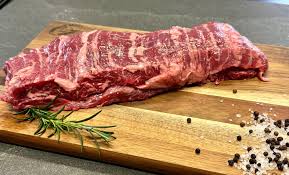
Beef skirt steak—known in South American markets as Entraña and in Mexico as Arrachera—remains one of the most commercially significant primals in the global beef trade. As we enter the 2026 export cycle, international B2B buyers have identified this cut as a primary driver for high-margin retail and restaurant programs. Because the skirt steak offers a rare combination of intense bovine flavor and a loose muscle structure that absorbs marinades perfectly, it has become the gold standard for global barbecue and ethnic cuisines. Consequently, Brazil has modernized its SIF-certified production to provide both “Inside” and “Outside” skirt specifications that meet the exacting standards of the Asian, North American, and European markets.
At GlobalExporter-BR, we connect professional procurement officers with Brazil’s most advanced and sanitary processing plants. We recognize that your profitability depends on the technical precision of the “Membrane-off” and “Skin-on” specifications. To learn more about our broader commitment to excellence in the global food supply chain, you can visit our official profile on Medium.
1. Anatomy and Performance: Inside vs. Outside Skirt
The beef skirt steak originates from the diaphragm area of the animal, specifically located within the plate primal. Unlike the Beef Flank Steak, which is a single abdominal muscle, the skirt consists of two distinct anatomical sections.
The Outside Skirt (Diaphragm)
The Outside Skirt represents the more prized of the two cuts. Specifically, it is the thicker, longer portion attached to the exterior of the chest wall. Furthermore, it features superior marbling and a more consistent thickness. Consequently, high-end steakhouses prioritize the Outside Skirt for premium Churrasco and Fajita programs.
The Inside Skirt (Transversus Abdominis)
The Inside Skirt sits further back within the abdominal cavity. While it is thinner and slightly tougher than its outside counterpart, it offers the same robust flavor profile. Moreover, it is more readily available and provides an excellent price point for high-volume retail. Notwithstanding the thinner profile, the Inside Skirt performs exceptionally well when marinated and cooked over high heat. For a technical comparison of how these differ from other loin cuts, refer to our Beef Striploin Technical Guide.
2. Technical Export Specifications (The Trim)
Brazilian packers offer beef skirt steak in several standardized configurations. Your choice of specification determines your final usable yield and the culinary application.
Skin-On vs. Skin-Off (Membrane-Off)
In the standard “Skin-on” configuration, the butcher leaves the tough, white connective membrane attached to the surface. Consequently, the price per kilo is lower. Nevertheless, the buyer must account for the labor required to “peel” the steak at the destination. Specifically, the “Denuded” or “Skin-off” specification represents the gold standard for export. In this case, the butcher removes all external fat and membranes, leaving a clean, 100% usable muscle.
Calibration and Sizing
We often calibrate beef skirt steak into weight ranges (e.g., 500g–800g per piece) to ensure uniformity in retail packaging. Furthermore, because this cut is exceptionally long, we sometimes offer it “Folded” or “U-packed” in vacuum bags to save space in master cartons. For a technical breakdown of how we measure the quality of these muscles, refer to our Beef Cuts Technical Guide.
3. The SIF and Sanitary Protocol for Global Access
Because the beef skirt steak has a high surface area and a loose grain, maintaining absolute sanitary integrity is paramount to prevent oxidation and spoilage. Accordingly, the SIF (Serviço de Inspeção Federal) implements rigorous monitoring.
-
Microbiological Safety: Inspectors conduct frequent swabs of the fabrication tables to ensure a sterile environment. Consequently, you receive a product with exceptionally low microbial counts, which is vital for maintaining a 120-day chilled shelf life.
-
Traceability: Every carton carries a SIF stamp and a unique barcode. Therefore, you can trace the product back to the specific slaughter date and farm. Furthermore, we verify the pH levels of every batch to ensure they remain below 5.8, guaranteeing a bright cherry-red color and optimal shelf life.
4. 2026 Logistics: Chilled Aging for Maximum Flavor
Shipping beef skirt steak internationally requires a strategic approach to preservation, particularly for the high-end foodservice sector.
Chilled Aging in Transit
Most premium shipments of beef skirt steak travel as chilled cargo. Similar to our Beef Tenderloin, these undergo “wet aging” during the 35-day sea voyage. Specifically, the vacuum-packed environment allows natural enzymes to break down the tough connective fibers. Consequently, the steak becomes more tender and the flavor profile deepens by the time it reaches your warehouse.
Frozen for High-Volume Retail
Conversely, for markets requiring long-term stability, we ship blast-frozen skirts. Because the cut has significant intramuscular fat, it withstands the freezing process well. Specifically, our plants reach a core temperature of -18°C rapidly to lock in the flavor for up to 24 months.
21 Frequently Asked Questions (FAQs) About Beef Skirt Steak
1. What is the Brazilian name for Beef Skirt Steak?
In Brazil, the beef skirt steak is known as Fraldinha (though technically it is the diaphragm portion) or Entraña in border regions.
2. Is the Outside Skirt better than the Inside Skirt?
Yes, most buyers consider the Outside Skirt superior because it is thicker, more tender, and has better marbling.
3. What is the best culinary use for beef skirt steak?
It is the classic choice for Fajitas, Mexican Arrachera, Argentine Churrasco, and stir-fries.
4. What does “Denuded” mean for skirt steak?
It means the butcher has removed the tough white membrane (silver skin) and all external fat, leaving the meat ready for the grill.
5. Why is the grain direction important on this cut?
The fibers on the skirt steak run across its width. Consequently, you must slice the meat lengthwise (perpendicular to the fibers) to ensure it is tender to chew.
6. Are Brazilian beef skirt steaks Halal certified?
Yes. GlobalExporter-BR sources exclusively from SIF-certified plants that maintain 100% Halal certification for international markets.
7. What is the typical weight of a Brazilian skirt steak?
Export-grade skirt steaks generally weigh between 0.5kg and 1.2kg per piece.
8. Why is the skirt popular for marinating?
Its loose muscle structure creates “pockets” that allow marinades to penetrate quickly and deeply into the meat.
9. Why is the color of the skirt deep red?
As a highly active respiratory muscle with high blood flow, it contains high levels of myoglobin, resulting in a dark, rich red color.
10. Does the skirt steak contain bone?
Standard export specs are 100% boneless.
11. What is the shelf life of frozen beef skirt steak?
When maintained at -18°C, frozen beef skirt steak has a shelf life of 24 months.
12. How do you prevent “bag punctures” during shipping?
We use high-micron, puncture-resistant shrink film. Furthermore, we smooth any sharp edges during the denuding process.
13. What is the Minimum Order Quantity (MOQ)?
The standard MOQ is one 40ft reefer container (approx. 27–28 tonnes).
14. Can I request a specific fat trim?
Yes. We typically supply a “Peeled” spec (0.5cm fat max) or a “Denuded” spec (99% lean).
15. Is Brazilian skirt steak grass-fed or grain-fed?
We offer both. However, grain-finished programs produce much better marbling in the Outside Skirt.
16. What is the difference between Skirt and Beef Ribs?
The skirt steak is the muscle attached to the ribs, whereas the rib primal includes the bone and the intercostal muscles.
17. How is the product packaged for export?
Each skirt is Individually Vacuum Packed (IVP), and then 10 to 15 pieces are placed in a master carton.
18. Does Brazil use growth hormones?
No. The use of growth hormones is strictly prohibited by Brazilian law and monitored by federal SIF inspectors.
19. How do you calculate the yield of a denuded skirt?
A denuded skirt provides nearly 100% usable yield for grilling or slicing.
20. How does the price compare to the Flank Steak?
The beef skirt steak is often priced slightly higher than the flank because it is more tender and has a higher demand in the restaurant sector.
21. How do I get a price quote for a bulk order?
Visit the contact page on GlobalExporter-BR and provide your destination port and required “Inside” vs. “Outside” ratio.
 Spanish
  English