
The best Cooking with Frozen Meat Tips start with one universal truth. the panic of realizing you forgot to thaw dinner is officially over, open the fridge, and realize the perfectly planned meal is still a rock-solid block in the freezer. In the past, this scenario often meant ordering expensive, last-minute takeout. However, the global market for frozen meat is evolving, driven by consumers who now know that cooking directly from the freezer is not only safe but often superior in convenience and flavor retention.
Mastering a few simple Cooking with Frozen Meat Tips unlocks true weeknight flexibility, drastically reduces food waste, and makes frozen beef, pork, and chicken a strategic choice, not a fallback. For consumers, this translates to huge savings and convenience; for the global chicken industry, it translates to massive, consistent demand.
This comprehensive guide will debunk the myths of cooking from frozen, provide the crucial food safety science, and give you high-performance cooking techniques for your favorite cuts.
1. Safety and Science: Essential Frozen Meat Cooking Tips
Many home cooks fear cooking frozen meat directly because they were taught they “must” thaw it first. However, the U.S. Department of Agriculture (USDA) confirms that cooking from the frozen state is perfectly safe for most cuts, provided you adjust your method. In fact, it can often be safer than risky, improper thawing methods.
A. The Danger Zone: Why Thawing is the Real Risk in Frozen Meat Preparation
The biggest threat to food safety is the Temperature Danger Zone, defined as $40^\circ \text{F}$ to $140^\circ \text{F}$ ($4^\circ \text{C}$ to $60^\circ \text{C}$). In this temperature range, harmful bacteria like Salmonella and E. coli multiply rapidly.
-
The Counter Thaw Disaster: Thawing a large piece of chicken or beef on the kitchen counter is highly dangerous. The outside thaws quickly and enters the Danger Zone for several hours, allowing bacteria to multiply, while the center remains frozen.
-
Safe Thawing Options: The only three safe methods for thawing are: in the refrigerator (slowest but safest), submerged in cold water (requires changing the water every 30 minutes), or in the microwave (must be cooked immediately).
The Bottom Line: By cooking directly from frozen, you bypass the risky thawing phase entirely, moving the meat rapidly through the Danger Zone and straight into the bacteria-killing heat. This is a critical Cooking with Frozen Meat Tips for busy families.
B. The Absolute Slow Cooker Ban (The Critical Safety Tip)
While many appliances can safely cook from frozen, the slow cooker (or Crock-Pot) cannot. This is because the appliance heats food very slowly.
-
When you place a frozen piece of chicken or pork into a slow cooker, the meat’s internal temperature will linger in the Danger Zone for too many hours. This gives bacteria ample time to reach harmful levels before the appliance finally cooks the center to a safe temperature.
-
The safe alternative: If you want a slow-cooked meal, thaw the meat completely in the refrigerator first. Alternatively, use a pressure cooker or Instant Pot, as their high-pressure, high-heat environment cooks the meat rapidly, preventing the bacteria growth window. (See official guidance here: USDA Food Safety and Inspection Service).
2. Quality Assurance: The Exporter’s Advantage in Cooking Frozen Meat
A frequent myth is that frozen meat loses flavor or texture. However, modern commercial freezing practices, especially in the chicken export industry, are designed specifically to preserve quality. This knowledge is crucial for home cooks applying the best Cooking with Frozen Meat Tips.
A. The Science of Ice Crystals and Drip Loss
When water freezes, it forms ice crystals. The size of these crystals is the single biggest factor affecting meat quality after thawing:
-
Slow Freezing (Home Freezers): When food freezes slowly, large, sharp ice crystals form. These large crystals puncture the muscle cell walls. Consequently, when the meat thaws, the damaged cells leak water, proteins, and vitamins, resulting in a dry, tough texture (known as drip loss or thaw loss).
-
Rapid/Flash Freezing (Commercial Exporters): Exporters use cryogenic or blast freezing to drop the temperature very rapidly. This rapid cooling forms tiny, microscopic ice crystals that remain contained within the cell walls. Therefore, when you cook the meat—like a block of frozen chicken breast—it retains its moisture and yields a significantly better, juicier texture.
This is why frozen chicken purchased from high-quality suppliers often performs just as well, or sometimes better, than store-bought “fresh” meat.
3. Golden Rules: Core Cooking with Frozen Meat Tips
Armed with the knowledge of safety and quality, apply these three core Cooking with Frozen Meat Tips to any recipe:
-
Always Add 50% Time: The heat needs extra time to penetrate the dense frozen core. Plan for approximately 50% longer than the time required for thawed meat.
-
Use an Instant-Read Thermometer: This is non-negotiable. Don’t rely on visual cues. The internal temperature must hit the USDA-recommended minimums.
-
Hold the Marinade: Marinades and rubs will not stick to or penetrate frozen meat. For initial cooking, use just a little oil, salt, and pepper. Add sauces, rubs, or heavy marinades in the last 15-30 minutes of cooking, once the surface has thawed and released moisture.
4. Appliance Guide: Advanced Cooking with Frozen Meat Tips
Modern kitchen gadgets are perfectly suited for integrating Cooking with Frozen Meat Tips into your routine.
A. The Pressure Cooker/Instant Pot (The Fastest Solution)
The Instant Pot is arguably the single best tool for cooking most types of frozen chicken and pork.
-
How it Works: The appliance uses pressurized steam to raise the boiling point of water, cooking food significantly faster than boiling or simmering. This speed ensures the frozen cut bypasses the Danger Zone quickly.
-
Tips for Success: Use at least one cup of liquid (broth or water) to create the necessary steam. Always set your timer based on the weight or thickness of the frozen meat, and use the Natural Pressure Release (NPR) or an extended Quick Release (QR) to prevent the chicken from drying out.
B. The Air Fryer (The Crispy Frozen Chicken Advantage)
The air fryer is a circulation oven that excels at creating a crispy exterior while cooking the inside of frozen chicken pieces evenly.
-
Tips for Success:
-
Pre-cook Thaw: For thick items like chicken breast (over 1.5 inches), air fry at a lower temperature ($350^\circ \text{F}$) for 10-15 minutes first. This partial thaw allows you to season the surface.
-
Target Time (Frozen Chicken Breast): For an average 6-8 oz frozen boneless, skinless chicken breast, cook at $360^\circ \text{F}$ for approximately 25-30 minutes, flipping halfway. Always check the internal $165^\circ \text{F}$ temperature.
-
Ideal Cuts: Frozen chicken wings and thighs cook beautifully in the air fryer from frozen, often yielding a superior texture to traditional oven roasting.
-
C. The Oven and Stove-Top (The Sear-Roast Technique)
You can still achieve excellent results with traditional appliances, especially for thicker beef steaks or pork chops.
-
Steaks and Chops: Pat the frozen cut dry. Sear the frozen steak in a very hot cast-iron pan for 90 seconds per side to build a crust. Then, immediately transfer the steak (in the pan) to a $400^\circ \text{F}$ oven to finish cooking evenly. This technique results in a much more uniform interior—with less of the dreaded gray band—than cooking thawed meat.
-
Simmering/Baking: The best application for frozen chicken breast is baking or simmering it directly in a sauce (like salsa, BBQ sauce, or spaghetti sauce). The liquid gently thaws and cooks the meat, adding flavor and moisture simultaneously.
5. Mastering Different Cuts: Specific Frozen Meat Tips
Different meats require slightly customized Cooking with Frozen Meat Tips.
A. Frozen Chicken Breast, Thighs, and Legs (The Exporter’s Staple)
As the most popular global export, chicken is often pre-portioned, making it ideal for freezing and cooking directly.
| Cut | Preparation Tip | Estimated Cook Time (From Frozen) |
| Chicken Breast (Boneless) | Use air fryer or simmer in sauce. Do not pan-fry. | 25-35 minutes |
| Chicken Thighs (Boneless/Skinless) | Excellent in the Instant Pot or baked in the oven at $375^\circ \text{F}$. | 30-40 minutes |
| Chicken Wings | Air fry or bake at high heat ($425^\circ \text{F}$) for ultimate crispiness. | 45-60 minutes |
| Ground Chicken | Must be thawed first via cold water or microwave to break up the clump safely. | Thaw is mandatory for safe cooking. |
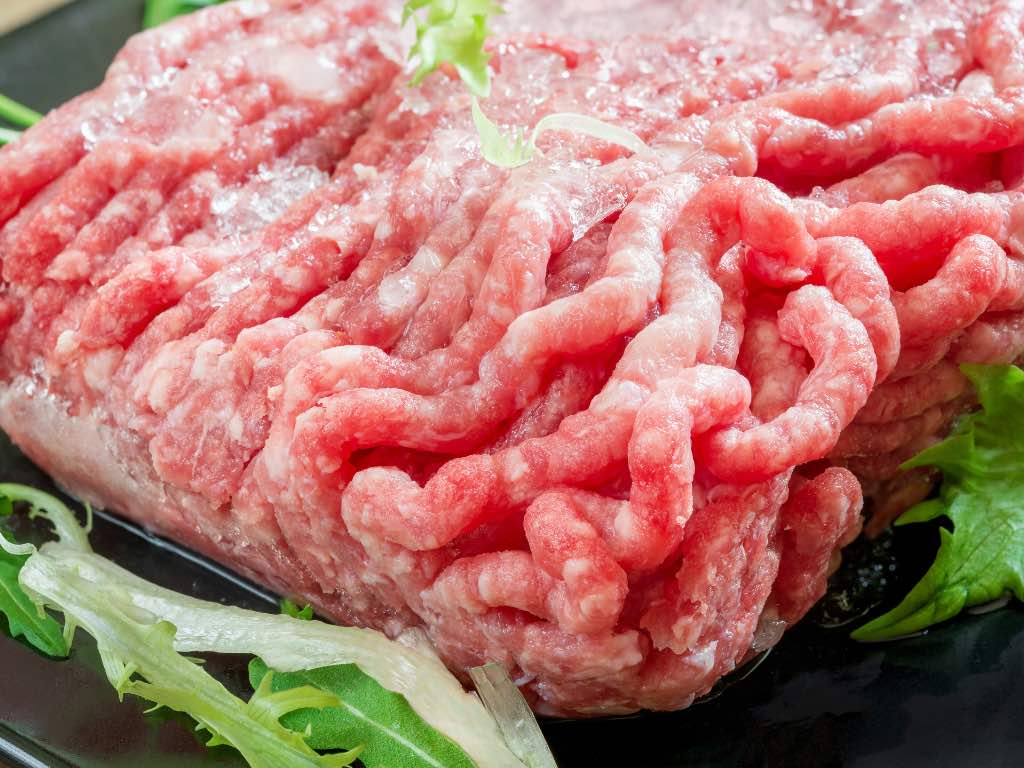
B. Frozen Ground Meat (Beef, Pork, Lamb)
Ground meat has a significantly larger surface area, meaning more potential for bacteria exposure. Therefore, cooking a dense block of frozen ground meat is difficult and discouraged by many experts.
-
The Flat Thaw Solution: The single best Cooking with Frozen Meat Tips for ground meat is to freeze it flat in a freezer bag. A flat 1-inch thick package of ground pork or beef will thaw completely in the cold water method in under an hour, making it viable for last-minute cooking.
-
The Crumble Method: If you must cook a block of frozen ground beef or pork immediately, place it in a saucepan with a little water. Cover and cook on low heat until the outside softens. Scrape off the thawed meat, and continue this process until the entire block is crumbled and fully cooked.
C. Frozen Fish and Seafood
Most fish is actually flash-frozen at sea. Therefore, frozen fish is often superior to “fresh” fish found in supermarkets.
-
Tips for Success: Simply rinse the frozen fillet under cold water to remove any ice glaze. Pat it very dry. Season and pan-fry, bake, or air fry. Frozen fish fillets usually require only about 15-20 minutes total cooking time.
6. Freezer Management: Key Frozen Meat Tips for Zero-Waste
To truly maximize the convenience of Cooking with Frozen Meat Tips and drive consumer demand, smart organization is essential.
A. FIFO and Inventory Tracking
-
First In, First Out (FIFO): Place new frozen items (like bulk bags of chicken thighs) toward the back. Move older items to the front. This ensures you use the oldest stock first, minimizing freezer burn and waste.
-
The Inventory List: Keep a running list (a whiteboard or sticky note on the freezer door) of what is inside and its freeze date. This prevents the costly scenario of discovering a lost item of frozen chicken months past its quality peak.
B. Proper Packaging is Protection
Freezer burn occurs when air contacts the food’s surface, dehydrating it and changing the color and texture. While the food remains safe, the quality drops severely.
-
Airtight is Key: Repackage store-bought meat into heavy-duty freezer bags or vacuum-seal the portions. The goal is to remove as much air as possible.
-
Portion Control: Freeze chicken breasts or pork chops individually. This allows you to pull out exactly what you need for a meal without thawing a large, unnecessary block. (This is especially important for maximizing the value of Frozen Chicken On Sale Promotions).
Frozen Meat is the Future of Flexible Cooking
The hesitation surrounding Cooking with Frozen Meat Tips is rapidly disappearing. In short, modern freezing techniques and a few simple safety rules have transformed the freezer from a long-term vault into an instant-access pantry.
By confidently embracing the “cook from frozen” lifestyle, consumers gain an invaluable sense of mealtime flexibility, reduce food waste, and benefit from the consistent quality and excellent value offered by the global frozen meat supply chain. From air fryer chicken wings to pressure cooker pork shoulder, the possibilities are endless. The key to convenience is simply turning up the heat.
 English
  Spanish