
Introduction to Brazil Meat Exporter Industry
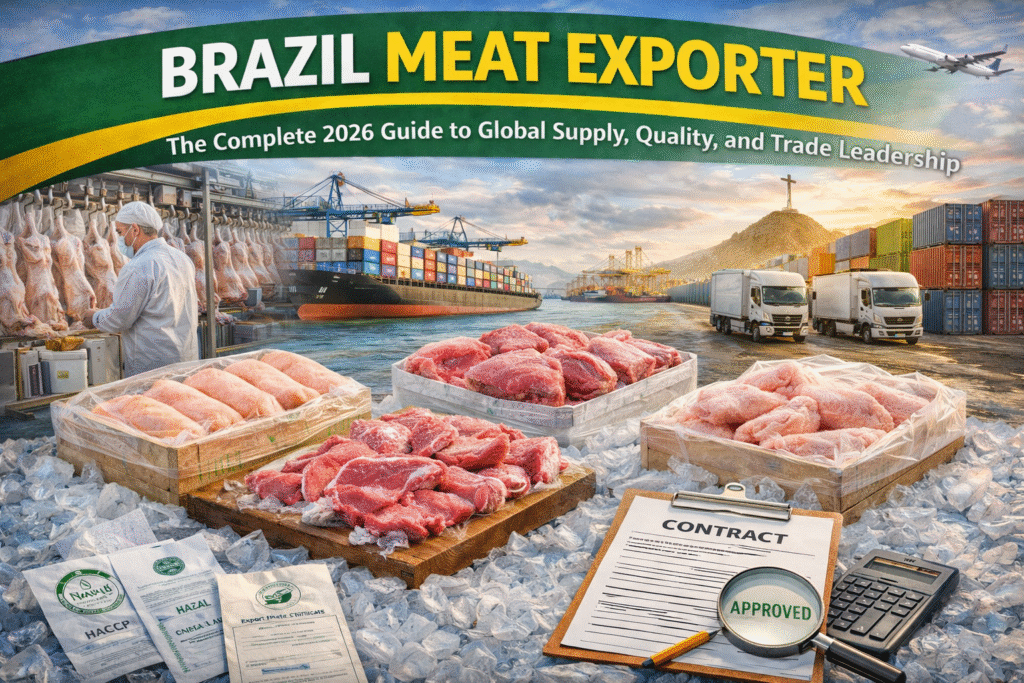
Brazil is one of the most powerful forces in the global meat trade. As a leading supplier of poultry, beef, and pork, the country has built a reputation for scale, consistency, and competitive pricing. A brazil meat exporter is not just a supplier—it is a critical link in the international food security chain.
With exports reaching more than 150 countries, Brazil plays a vital role in feeding millions of people worldwide. Strong agricultural resources, modern processing facilities, and strict regulatory oversight allow Brazilian exporters to meet diverse global requirements.
This comprehensive guide explains how brazil meat exporters operate, what products they offer, why global buyers trust Brazil, and how importers can choose the right exporter in 2026.
Why Brazil Is a Global Meat Export Leader
Brazil’s leadership in the meat export industry is the result of several long-term advantages working together.
Key factors behind Brazil’s dominance:
- Vast agricultural land and favorable climate
- Abundant supply of animal feed (corn and soy)
- Advanced livestock farming techniques
- Strong government regulation and inspection
- Large-scale production capacity
These advantages allow Brazil to deliver large volumes of high-quality meat at competitive prices year-round.
Types of Meat Exported by Brazil
A brazil meat exporter typically offers a wide portfolio of products to serve different markets and dietary needs.
1. Poultry Meat (Chicken)
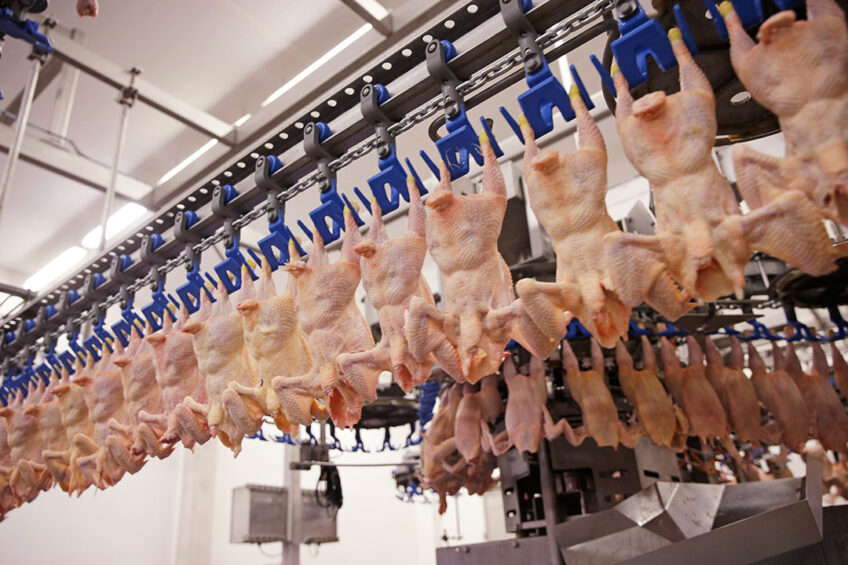
Brazil is one of the world’s largest chicken exporters. Poultry exports include:
- Whole frozen chicken
- Chicken leg quarters
- Chicken breast fillets
- Wings and paws
- Mechanically deboned meat (MDM)
Chicken exports are especially strong in the Middle East, Asia, and Africa.
2. Beef
Brazilian beef is known for its quality and affordability. Exported beef products include:
- Frozen boneless beef
- Bone-in beef cuts
- Offals (liver, kidney, tripe)
Beef exports are popular in China, the Middle East, and Europe.
3. Pork
Brazil also exports pork to many global markets, including:
- Pork cuts
- Frozen pork carcasses
- Processed pork products
Pork exports are growing steadily, especially in Asian markets.

How a Brazil Meat Exporter Operates
Understanding the export process helps buyers evaluate reliability and compliance.
1. Livestock Farming
Brazilian livestock farms follow structured feeding, health monitoring, and biosecurity programs. Animal welfare and disease prevention are key priorities.
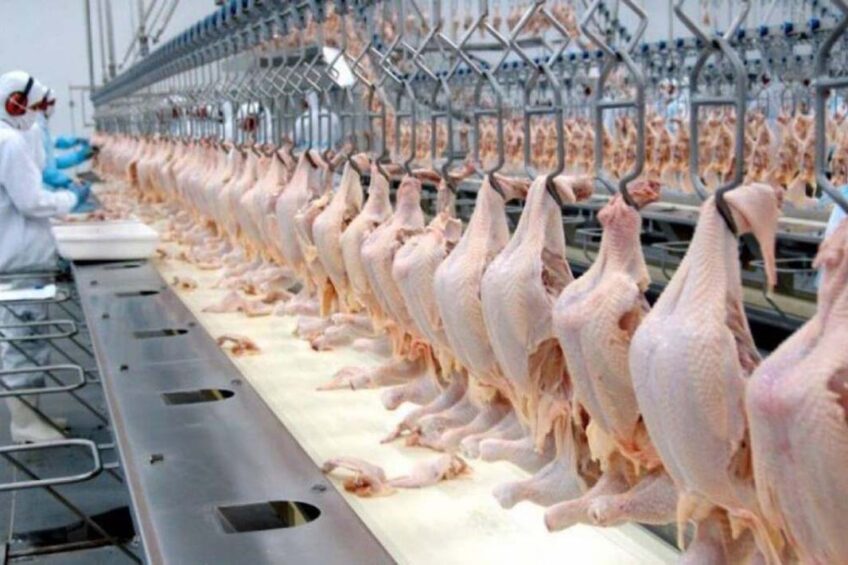
2. Slaughter and Processing
Animals are processed in government-approved facilities under veterinary supervision. Hygiene, temperature control, and traceability are strictly maintained.
3. Quality Control and Inspection
Every shipment undergoes inspection by Brazilian authorities. Products must meet both domestic and importing-country regulations.
4. Packaging and Cold Storage
Meat is packaged in export-grade materials and stored in cold rooms at:
- -18°C for frozen meat
- 0–4°C for chilled meat
5. Export Documentation
Exporters handle all paperwork, including:
- Veterinary Health Certificate
- Certificate of Origin
- Halal Certificate (when required)
- Import permits
Certifications Required for Brazil Meat Exporters
Certifications are a major reason why global buyers trust Brazilian suppliers.
Common certifications include:
- HACCP (Hazard Analysis and Critical Control Points)
- ISO 22000 (Food Safety Management)
- Halal Certification (essential for Muslim markets)
- Government veterinary approval
Halal-certified brazil meat exporters dominate Middle Eastern markets due to strict compliance.
Major Export Markets for Brazilian Meat
Brazilian meat reaches nearly every region of the world.
Top importing regions include:
- Middle East: Saudi Arabia, UAE, Iraq, Kuwait
- Asia: China, Japan, South Korea, Philippines
- Africa: Egypt, South Africa, Angola
- Europe: Netherlands, Italy, Spain
Each market has unique standards, and Brazilian exporters are experienced in adapting to them.
Brazil Meat Exporter vs Other Global Suppliers
| Factor | Brazil | USA | EU |
|---|---|---|---|
| Production volume | Very high | High | Medium |
| Pricing | Competitive | Medium | High |
| Halal availability | Excellent | Limited | Limited |
| Product variety | Extensive | Moderate | Moderate |
| Export reach | Global | Global | Regional |
This balance of volume, price, and compliance gives Brazil a strong competitive edge.
Pricing Factors in Brazilian Meat Exports
Prices from a brazil meat exporter depend on multiple variables:
- Type of meat (chicken, beef, pork)
- Cut and processing level
- Order volume
- Packaging type
- Shipping distance
- Global supply and demand
Bulk orders usually result in better pricing, especially for frozen meat.
Cold Chain and Export Logistics
Maintaining the cold chain is essential in meat exports.
Reliable exporters ensure:
- Continuous temperature monitoring
- Use of refrigerated containers
- Fast port handling
- Minimal transit delays
Brazil’s ports, such as Santos and Paranaguá, are well-equipped for large-scale refrigerated exports.
Sustainability and Ethical Practices
Sustainability is becoming increasingly important in the global meat trade.
Many brazil meat exporters now focus on:
- Reduced antibiotic use
- Responsible feed sourcing
- Waste reduction
- Energy-efficient processing plants
These practices help exporters meet international ESG expectations.
How to Choose a Reliable Brazil Meat Exporter
Selecting the right supplier is critical for long-term success.
Buyer checklist:
- Verified export license
- Clear certifications
- Proven export history
- Transparent pricing
- Strong logistics capability
- Responsive communication
Long-term partnerships with reliable exporters reduce risk and ensure consistency.
Common Challenges in Meat Export Trade
Despite its strengths, the industry faces challenges such as:
- Changing import regulations
- Currency fluctuations
- Shipping delays
- Animal disease concerns
Experienced exporters mitigate these risks through compliance planning and diversification.
Future Outlook for Brazil Meat Exporters
The future of the brazil meat exporter industry remains strong.
Key trends shaping 2026 and beyond:
- Growth in value-added meat products
- Increased demand from Africa and Asia
- Digital traceability systems
- Stronger sustainability standards
Brazil’s ability to adapt ensures continued global leadership.
FAQs About Brazil Meat Exporter
1. Is meat from Brazil safe to import?
Yes, Brazilian meat exports are regulated by strict food safety and veterinary standards.
2. Does a brazil meat exporter provide halal meat?
Most exporters offer halal-certified meat for Muslim markets.
3. What is the shelf life of frozen Brazilian meat?
Frozen meat stored at -18°C can last up to 12–24 months, depending on the product.
4. Can small importers buy from Brazil?
Yes, many exporters support small and medium buyers with container-based orders.
5. Which meat does Brazil export the most?
Poultry (chicken) is Brazil’s largest meat export by volume.
6. How long does shipping from Brazil take?
Shipping typically takes 15–45 days, depending on destination.
Conclusion
A brazil meat exporter plays a crucial role in the global food supply chain. With strong production capacity, strict certifications, and competitive pricing, Brazil continues to serve as a trusted source of poultry, beef, and pork worldwide.
For importers, wholesalers, and food businesses, sourcing from Brazil offers reliability, scalability, and long-term value. As global demand for protein grows, Brazilian meat exporters are well-positioned to remain leaders in international trade.
External Authority Resource
Brazilian Ministry of Agriculture – Export Standards:
https://www.gov.br/agricultura
 English
  Spanish