
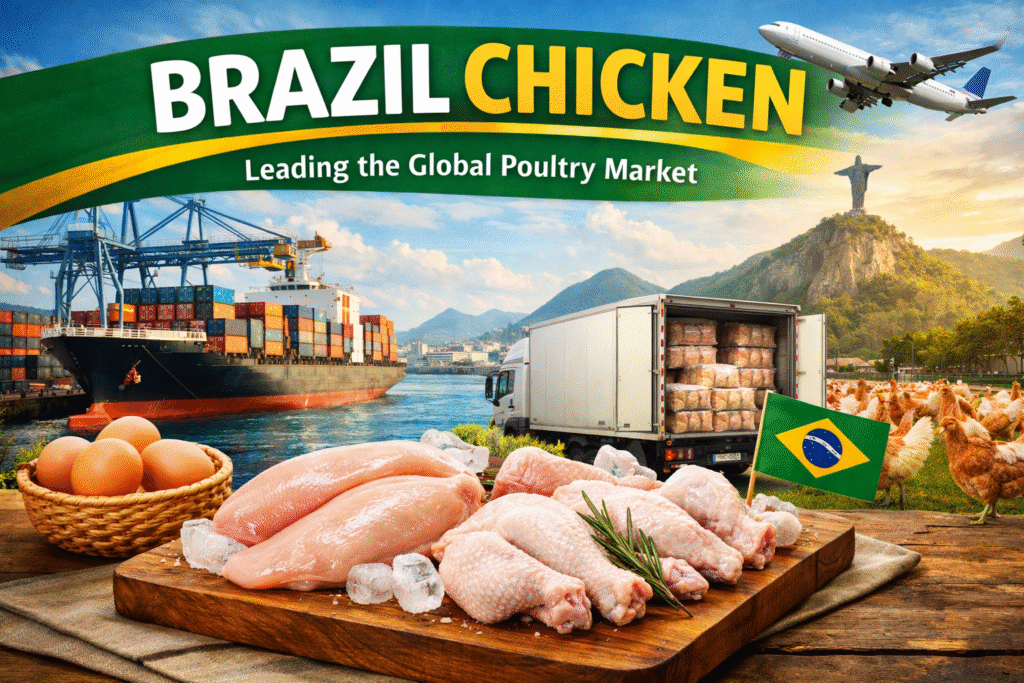
Introduction to Brazil Chicken
Brazil chicken has become a household and business name across international food markets. From Asia and the Middle East to Africa and Europe, buyers consistently turn to Brazil for high-quality poultry products. The reasons go far beyond low prices. Brazil has built a complete ecosystem that supports large-scale poultry farming, strict health standards, and reliable exports.
Over the past two decades, Brazil has positioned itself as one of the world’s top poultry exporters. Thanks to advanced farming techniques, favorable climate conditions, and strong government oversight, brazil chicken is now seen as a symbol of consistency, safety, and value.
In this article, we explore everything you need to know about brazil chicken—from production and processing to certifications, export markets, FAQs, and future opportunities.

Brazil’s Position in the Global Poultry Market
Brazil consistently ranks among the world’s largest poultry producers and exporters. The country exports millions of metric tons of chicken every year, supplying more than 150 countries.
Several factors contribute to this dominance:
- Abundant agricultural land
- Access to affordable feed ingredients like corn and soy
- Year-round poultry production due to a favorable climate
- Strong export infrastructure and ports
These advantages allow Brazil to maintain stable supply chains even during global disruptions.
Why Brazil Chicken Is in High Global Demand
1. Competitive Pricing Without Quality Compromise
One of the biggest advantages of brazil chicken is its cost efficiency. Brazil produces chicken at lower costs compared to many other countries, but this does not mean reduced quality. Efficient farming systems and economies of scale allow exporters to offer competitive prices.
2. Strict Food Safety and Quality Standards
Brazilian poultry exporters operate under strict inspection systems governed by the Ministry of Agriculture. Processing plants follow international food safety protocols such as HACCP and ISO standards.
3. Wide Product Range
Brazil chicken is available in many forms:
- Whole chicken
- Chicken breast
- Chicken leg quarters
- Chicken wings
- Mechanically deboned meat (MDM)
- Processed and value-added products
This flexibility makes Brazilian poultry suitable for wholesalers, retailers, restaurants, and food processors.

How Brazil Chicken Is Produced
Modern Poultry Farming Practices
Brazilian poultry farms use modern technology to ensure bird health and productivity. Automated feeding systems, climate-controlled housing, and veterinary monitoring are standard practices.
Farmers focus on:
- Biosecurity measures
- Balanced nutrition
- Disease prevention
- Animal welfare
These practices ensure healthy birds and high-quality meat.
Sustainable Feed Supply
Brazil is one of the world’s largest producers of corn and soybeans, which are essential for poultry feed. Local availability reduces costs and ensures consistent feed quality.
Processing and Packaging of Brazil Chicken
Processing facilities in Brazil are designed to meet international export requirements. Chickens are processed in hygienic environments using advanced equipment.
Key processing steps include:
- Slaughter under veterinary supervision
- Rapid chilling to preserve freshness
- Cutting and deboning
- Packaging and labeling
- Cold storage and export preparation
Packaging options range from bulk cartons for wholesalers to retail-ready packs for supermarkets.
Certifications and Compliance
Brazil chicken exports come with globally recognized certifications, which build trust among buyers.
Common certifications include:
- Halal certification (especially for Middle East markets)
- ISO 22000
- HACCP
- Veterinary health certificates
Halal-certified brazil chicken is particularly popular in Muslim-majority countries.
Top Importers of Brazil Chicken
Brazil exports poultry to a wide range of international markets. Major importing regions include:
- Middle East: Saudi Arabia, UAE, Iraq
- Asia: China, Japan, South Korea
- Africa: South Africa, Angola, Egypt
- Europe: Netherlands, Germany
Each market has specific requirements, and Brazilian exporters are experienced in meeting diverse regulations.
Brazil Chicken vs Other Global Suppliers
When compared with other poultry-exporting countries, brazil chicken stands out for several reasons:
| Feature | Brazil | USA | EU |
|---|---|---|---|
| Price Competitiveness | High | Medium | Low |
| Export Volume | Very High | High | Medium |
| Halal Availability | Yes | Limited | Limited |
| Product Variety | Extensive | Moderate | Moderate |
This combination gives Brazil a strong edge in the global poultry trade.

Logistics and Export Infrastructure
Brazil has well-developed ports and cold-chain logistics systems. Frozen chicken products are shipped in temperature-controlled containers, ensuring quality preservation during transit.
Major export ports include Santos, Paranaguá, and Itajaí. These ports handle large export volumes efficiently, reducing delays and costs.
Common Uses of Brazil Chicken
Brazil chicken is widely used across different industries:
- Restaurants and fast-food chains
- Supermarkets and retailers
- Food processing factories
- Catering and hospitality businesses
Its consistent quality makes it suitable for both cooking and further processing.
Health and Nutritional Benefits
Chicken is a lean source of protein, and brazil chicken meets international nutritional standards. It provides:
- High-quality protein
- Essential vitamins like B6 and B12
- Low fat content (especially breast meat)
This makes it popular among health-conscious consumers worldwide.
Future Trends in the Brazil Chicken Industry
The future of brazil chicken looks promising. Key trends include:
- Increased focus on sustainability
- Expansion into value-added products
- Digital traceability systems
- Growth in emerging markets
Brazilian exporters are investing heavily in innovation to maintain global leadership.
FAQs About Brazil Chicken
1. Is brazil chicken safe to eat?
Yes, brazil chicken is produced under strict food safety regulations and undergoes veterinary inspection before export.
2. Is brazil chicken halal certified?
Most brazil chicken exporters offer Halal-certified products, especially for Middle Eastern and Muslim markets.
3. Why is brazil chicken cheaper than others?
Lower feed costs, efficient farming, and large-scale production allow Brazil to offer competitive pricing.
4. Can small businesses import brazil chicken?
Yes, many exporters support small and medium buyers with flexible order quantities.
5. How long does frozen brazil chicken last?
When stored at -18°C, frozen brazil chicken can last up to 12 months.
6. Which cuts of brazil chicken are most popular?
Chicken leg quarters, wings, and breast fillets are among the most in-demand cuts.
Conclusion
Brazil chicken has earned its reputation as a global poultry leader through quality, affordability, and reliability. With advanced farming practices, strict certifications, and strong export infrastructure, Brazil continues to meet the growing demand for safe and affordable poultry worldwide.
For importers, wholesalers, and food businesses, choosing brazil chicken means choosing consistency and trust. As global food demand rises, Brazil’s poultry industry is well-positioned to remain at the forefront of international trade.
For official poultry export guidelines, visit the Brazilian Ministry of Agriculture:
https://www.gov.br/agricultura
 English
  Spanish