
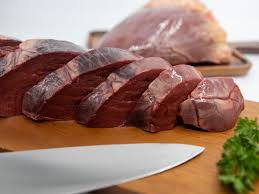
The procurement of beef tongue—known in Brazil as the Língua—represents one of the most lucrative segments of the international variety meat trade. In 2026, global B2B demand continues to rise, particularly in the Asian and North American markets, where this cut is prized for its high fat content and meltingly tender texture. Because the tongue serves as a delicacy in Japanese Yakiniku, Mexican Lengua tacos, and European charcuterie, mastering its technical specifications is essential for procurement professionals. Consequently, Brazil has standardized its SIF-certified offal lines to deliver a variety of trim levels, ranging from the standard “Long-cut” to the premium “Swiss-cut.”
At GlobalExporter-BR, we connect international buyers with Brazil’s most sophisticated processing plants. We recognize that your profitability depends on the technical precision of the “Root-trim” and the “Peeling” protocols. To learn more about our broader commitment to transparency in the global food supply chain, you can visit our official profile on Medium.
1. Anatomy and Performance
The beef tongue is a complex muscular organ. Unlike skeletal muscles like the Beef Chuck Eye Roll, the tongue contains a high concentration of fatty tissue and a unique muscle fiber orientation.
The Texture Profile
The primary value of beef tongue lies in its fat distribution. Specifically, the “root” (the back) of the tongue contains significant intramuscular fat, making it the most tender portion. Furthermore, because the tongue remains in constant motion, the muscle is rich in flavor. Consequently, chefs prioritize the back half of the tongue for premium grilling. Notwithstanding its tough external skin, the internal meat becomes exceptionally soft when poached or slow-cooked. For a technical comparison of how variety meats perform vs. muscle cuts, refer to our Beef Heart Technical Guide.
2. Technical Export Specifications (The Trim)
Brazilian packers offer beef tongue in several standardized configurations. Your choice of specification determines your final yield and secondary processing costs.
Swiss-Cut Tongue (Short-Cut)
This represents the gold standard for high-end export. The butcher removes the hyoid bone, the throat meat, and the salivary glands. Specifically, the “Swiss-cut” provides a clean, 100% usable muscle block. Consequently, you pay a premium price but benefit from near-zero waste at the destination.
Long-Cut Tongue
In this configuration, the packer leaves the root and some of the throat meat attached. Consequently, the price per kilo is lower. Nevertheless, the buyer must account for the labor required to trim the glands and bones at the destination. For a technical breakdown of how we measure quality, refer to our Beef Offal Export Guide.
3. The SIF and Sanitary Protocol
Because beef tongue has a rough surface (the papillae), maintaining absolute sanitary integrity is paramount to prevent microbial trap. Accordingly, the SIF (Serviço de Inspeção Federal) implements rigorous monitoring.
-
Surface Sterilization: Inspectors verify that processors scrub and rinse the tongue surface with chilled, filtered water to remove any feed residue. Consequently, you receive a product with exceptionally low microbial counts.
-
Rapid Freezing: Facilities must blast-freeze the tongues to a core temperature of -18°C within hours of slaughter. This preserves the natural pink color and prevents enzymatic breakdown. Furthermore, every carton carries a SIF stamp and a unique barcode for 100% farm-to-table traceability.
4. 2026 Logistics: Cold Chain Excellence
Shipping beef tongue internationally requires a strategic approach to packaging to prevent freezer burn on the delicate surface.
The Role of Vacuum Packing
Most international shipments of premium beef tongue travel as vacuum-packed cargo. Specifically, our plants use high-micron shrink film to protect the product. Because the tongue has a high fat content, it withstands the freezing process well. Consequently, we maintain a 24-month shelf life for frozen stocks.
Packaging for B2B
-
Individually Vacuum Packed (IVP): We pack each tongue separately to allow for easy retail distribution.
-
Master Cartons: We place 10 to 15 tongues in a heavy-duty, moisture-resistant carton. Specifically, this ensures the product remains protected during the 35-day sea voyage to ports in Hong Kong, Vietnam, or the UAE.
21 Frequently Asked Questions (FAQs) About Beef Tongue
1. What is the Brazilian name for Beef Tongue?
In Brazil, the beef tongue is called Língua de Boi.
2. Is the Swiss-cut better than the Long-cut?
Yes, for retail and foodservice. The Swiss-cut is “ready-to-cook,” whereas the Long-cut requires significant butchery at the destination.
3. What is the best culinary use for beef tongue?
It is ideal for Japanese Yakiniku (grilled), Mexican Tacos de Lengua, and traditional pickled tongue.
4. What does “Swiss-cut” mean?
It means the butcher has removed the root, bones, and salivary glands, leaving only the clean muscle of the tongue.
5. Why is the tongue considered a “premium” offal?
Its high fat content and unique texture make it one of the most expensive and sought-after variety meats in Asia.
6. Are Brazilian beef tongues Halal certified?
Yes. GlobalExporter-BR sources exclusively from SIF-certified plants that maintain 100% Halal certification.
7. What is the typical weight of a Brazilian Swiss-cut tongue?
Export-grade Swiss-cut tongues typically weigh between 1.0kg and 1.5kg.
8. Why is the back of the tongue more expensive?
The back (root) contains the highest concentration of fat and is significantly more tender than the tip.
9. Does the tongue contain any bone?
Long-cut tongues contain the hyoid bone. Swiss-cut tongues are 100% boneless.
10. How do you remove the skin?
The skin is usually removed after poaching the tongue in hot water, which allows it to peel off easily.
11. What is the shelf life of frozen beef tongue?
When maintained at -18°C, frozen beef tongue has a shelf life of 24 months.
12. How do you prevent “freezer burn” during shipping?
We use multi-layered vacuum shrink bags to ensure no air contact with the meat surface.
13. What is the Minimum Order Quantity (MOQ)?
The standard MOQ is one 40ft reefer container (approx. 27–28 tonnes), which can be mixed with other offal like Beef Heart.
14. Can I request “Peeling” at the plant?
Some plants offer pre-peeled tongues, though most B2B buyers prefer the skin-on version to protect the meat during transit.
15. Is Brazilian beef tongue grass-fed?
Most Brazilian tongues come from grass-fed cattle, which provides the rich flavor profile buyers expect.
16. What is the difference between Beef Tongue and Beef Neck Meat?
The tongue is much fattier and has a smoother texture once cooked, whereas neck meat is fibrous and collagen-rich.
17. How is the product packaged for export?
Most are Individually Vacuum Packed (IVP) and boxed in 15kg to 20kg master cartons.
18. Does Brazil use growth hormones?
No. The use of growth hormones is strictly prohibited by Brazilian law and monitored by federal SIF inspectors.
19. How do you calculate the yield of a Swiss-cut tongue?
A Swiss-cut tongue provides nearly 100% usable yield after the skin is peeled.
20. How does the price compare to the Beef Topside?
Premium Swiss-cut beef tongue is often more expensive than the topside due to high demand in Asian markets.
21. How do I get a price quote for a bulk order?
Visit the contact page on GlobalExporter-BR and provide your destination port and required “Swiss” vs. “Long” ratio.
 English
  Spanish