
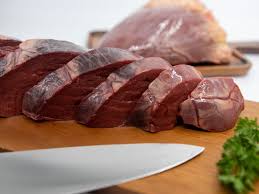
The procurement of beef heart—known in the Brazilian trade as Coração—represents a high-growth segment of the international variety meat market. In the 2026 global landscape, B2B buyers increasingly target this organ meat due to its unique classification as both a muscle and an offal product. Because the heart provides a dense, lean protein profile and a remarkably low fat content, it serves as a primary raw material for traditional culinary delicacies, pet food formulations, and pharmaceutical extracts. Consequently, Brazil has modernized its SIF-certified offal lines to deliver a highly standardized product that meets the rigorous sanitary benchmarks of Asia, Europe, and the Middle East.
At GlobalExporter-BR, we bridge the gap between Brazil’s massive slaughter capacity and your specific technical requirements. We understand that your profitability depends on the precision of the “Fat-trim” and the “Internal-cleaning” protocols. To learn more about our broader commitment to transparency in the global food supply chain, you can visit our official profile on Medium.
1. Anatomy and Performance
The beef heart is a hard-working, involuntary muscle located in the thoracic cavity. Anatomically, it consists of the myocardium, which features a significantly tighter grain than skeletal muscles like the Beef Chuck Eye Roll.
The Nutritional Powerhouse
The primary value of the beef heart lies in its mineral and enzyme density. Specifically, it contains high concentrations of Coenzyme Q10 (CoQ10), iron, and B-vitamins. Furthermore, because the heart remains active throughout the animal’s entire life, the meat possesses a robust flavor profile that rivals the Beef Flank Steak. Consequently, chefs utilize the heart for specialized grilling (such as Peruvian Anticuchos) and thin-sliced carpaccio. Notwithstanding its classification as offal, the heart performs culinarily like a very lean steak.
2. Technical Export Specifications (The Trim)
Brazilian packers offer beef heart in several standardized configurations. Your choice of specification determines your final industrial yield and the consistency of your culinary output.
Whole Heart (Fat-On)
In this configuration, the packer removes the heart from the animal but leaves the coronary fat cap and the major blood vessels (aorta) partially attached. Consequently, the price per kilo is lower. Nevertheless, the buyer must account for the secondary labor required to clean the organ at the destination.
Cleaned and Trimmed Heart
This represents the preferred standard for high-end retail and pet food manufacturers. The butcher removes the “crown” fat, the external membranes, and the internal blood clots. Specifically, the “Trimmed” designation indicates that the butcher has fabricated the heart into a clean, 100% usable muscle block. Furthermore, we often calibrate these into weight ranges (e.g., 1.5kg–2.5kg) to ensure uniformity in your production lines. For a technical breakdown of how we measure quality compared to other offal, refer to our Beef Offal Export Guide.
3. The SIF and Sanitary Protocol
Because the beef heart contains internal chambers and valves, maintaining absolute sanitary integrity is paramount. Accordingly, the SIF (Serviço de Inspeção Federal) implements rigorous monitoring at every stage.
-
Internal Sterilization: Inspectors verify that processors flush the heart chambers with high-pressure, chilled water to remove all residual blood. Consequently, you receive a product with exceptionally low microbial counts and a neutral odor.
-
Rapid Freezing: Facilities must blast-freeze the hearts to a core temperature of -18°C within hours of slaughter. This prevents enzymatic breakdown and preserves the natural dark-red color. Furthermore, every carton carries a SIF stamp and a unique barcode for 100% farm-to-table traceability.
4. 2026 Logistics: Optimizing Variety Meat Shipping
Shipping beef heart internationally requires a strategic approach to freezing to ensure the muscle fibers remain stable during transit.
The Role of Blast Freezing
Most international shipments of beef heart travel as blast-frozen cargo. Specifically, our plants use tunnel freezers set to -35°C to lock in freshness. Because the heart has a very low water-binding capacity compared to Beef Ribs, it withstands the freezing process exceptionally well.
Packaging for B2B
-
Bulk Poly-lined Cartons: We typically pack hearts in 20kg or 25kg master cartons with heavy-duty internal liners.
-
Vacuum Packing (Retail Ready): For specific markets, we offer individually vacuum-packed (IVP) hearts. Consequently, the product remains protected from freezer burn during the 35-day sea voyage.
21 Frequently Asked Questions (FAQs) About Beef Heart
1. What is the Brazilian name for Beef Heart?
In the Brazilian market, it is called Coração de Boi.
2. Is the beef heart a tough cut?
It is a very dense muscle. Specifically, it is tender if sliced thinly and grilled quickly, or if braised for a long period.
3. What is the best culinary use for beef heart?
It is the premier choice for Peruvian Anticuchos (grilled skewers), dicing for slow-cooked stews, and as a high-protein ingredient in premium pet foods.
4. What is the “Crown” fat?
The crown fat is the layer of fat located at the top of the heart where the blood vessels connect. Premium specs require this fat to be removed.
5. Why is the beef heart popular in the pet food industry?
Its high taurine and CoQ10 content make it an essential nutritional component for heart health in dogs and cats.
6. Are Brazilian beef hearts Halal certified?
Yes. GlobalExporter-BR sources exclusively from SIF-certified plants that maintain 100% Halal certification.
7. What is the typical weight of a single beef heart?
A standard export-grade heart typically weighs between 1.5kg and 2.5kg.
8. Why is the color of the heart darker than a steak?
As a highly oxygenated muscle with constant blood flow, it contains significantly more myoglobin, resulting in a dark, rich red color.
9. Does the heart contain any bone?
No. The beef heart is 100% muscle and connective tissue.
10. How do you prevent the heart from having a “metallic” taste?
Thorough internal cleaning and flushing of the chambers with chilled water significantly reduce the iron-like metallic aftertaste.
11. What is the shelf life of frozen beef heart?
When maintained at -18°C, frozen beef heart has a shelf life of 24 months.
12. Can I buy beef heart for human consumption and pet food from the same plant?
Yes. All SIF-certified heart meat is fit for human consumption unless specifically graded as “Industrial.”
13. What is the Minimum Order Quantity (MOQ)?
The standard MOQ is one 40ft reefer container (approx. 27–28 tonnes), which can be mixed with other variety meats.
14. Can I request a “95CL” heart spec?
Yes. We offer highly trimmed hearts that meet the 95% Chemical Lean standard for industrial dicing.
15. Is Brazilian beef heart grass-fed?
Most Brazilian hearts come from grass-fed cattle, which enhances the mineral density and lean protein profile.
16. What is the difference between Beef Heart and Beef Tongue?
The heart is a denser, leaner muscle, while the tongue has a higher fat content and a very different, softer texture.
17. How is the product packaged for export?
Most are bulk-packed in 20kg poly-lined cartons or Individually Vacuum Packed (IVP).
18. Does Brazil use growth hormones?
No. The use of growth hormones is strictly prohibited by Brazilian law and monitored by federal SIF inspectors.
19. How do you calculate the yield of a trimmed heart?
A trimmed, aorta-off heart provides nearly 100% usable yield for dicing or slicing.
20. How does the price compare to the Beef Neck Meat?
The beef heart is generally more affordable than neck meat, offering excellent value for price-sensitive industrial clients.
21. How do I get a price quote for a bulk order?
Visit the contact page on GlobalExporter-BR and provide your destination port and required “Trim” specification.
 English
  Spanish